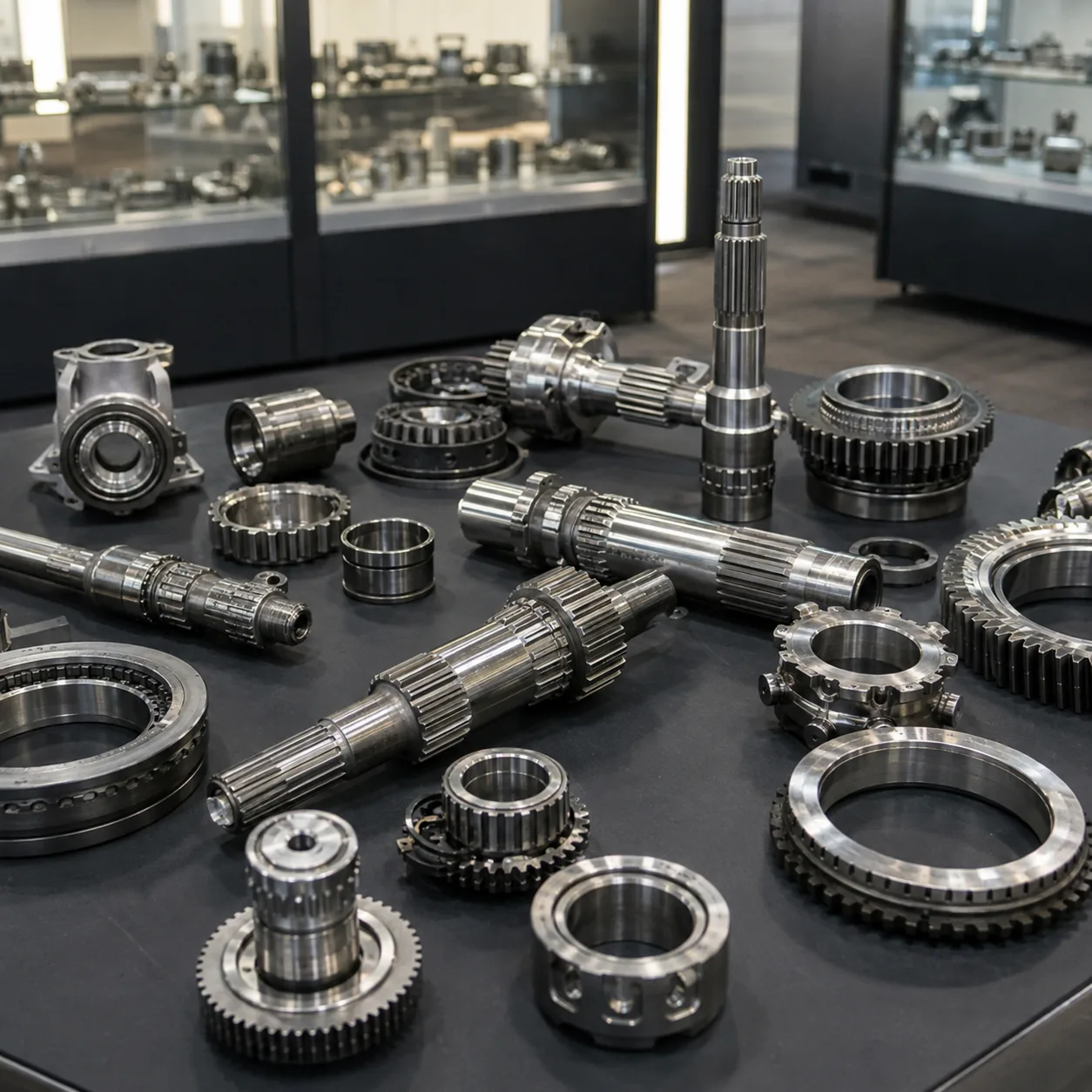
Industries That Use Steel Shot and Steel Grit
A practical overview of how steel shot and steel grit are used across foundry, automotive, structural steel, shipbuilding, machinery, mining, container, oilfield, stone-processing, aerospace, and precision-component applications.
Review the information on this page and confirm product selection against the operating context.
Steel shot and steel grit are both reusable metallic abrasives, but they do different jobs. Steel shot is nearly spherical and works through impact and coverage. Steel grit is angular and cuts more aggressively. Shot suits desanding, scale removal, and general cleaning. Grit is better for rust, tightly bonded scale, old coatings, and creating a profile before coating. ISO 11124-3 covers high-carbon cast-steel shot and grit for blast cleaning and notes they fit well in systems with abrasive recovery and reuse (International Organization for Standardization [ISO], 2018).
Industry alone doesn't decide the abrasive. Workpiece material, surface condition, equipment, required cleanliness, target profile, and downstream processing matter more. SAE J827, J1993, and J444 give the technical framework for shot, grit, and size designations (SAE International, 2019a, 2019b, 2023).
Foundry
Foundries rely heavily on steel shot. Castings often keep moulding sand, oxide scale, and process residue after shakeout. Steel shot gives repeatable impact coverage for cleaning steel and iron castings, valve bodies, flanges, wheels, housings, and other cast parts. Steel grit can be added when scale is stubborn or a stronger profile is needed.
Automotive Manufacturing
Automotive production uses steel abrasives on castings, forgings, heat-treated parts, axles, wheels, frames, and remanufactured components. Steel shot removes residual sand, forging scale, and heat-treatment scale in repetitive production. Steel grit suits rust, old coatings, or coating-profile work.
Blast cleaning and shot peening are different processes. Farrahi et al. (1995) show that shot size and peening parameters affect residual stress and fatigue behavior in spring steel.
Steel and Structural Steel
Steel plate, beams, sections, pipe, and welded fabrications often need preparation before painting or protective coating. Steel grit removes rust and mill scale while creating a surface profile. ISO 8501-1 gives a visual framework for rust and preparation grades, and ISO 8503-1 covers comparison of blast-cleaned profiles (ISO, 2007, 2012).
Shipbuilding
Ship plate, hull blocks, deck structures, and offshore steel need careful prep before coating. Steel grit handles plate pre-treatment, mill-scale and rust removal, and maintenance blasting before recoating. Steel shot works well where stable impact and coverage matter in recyclable wheel-blast systems. ISO 8504-2 calls abrasive blast-cleaning a main steel-surface preparation method before coating (ISO, 2019).
Machinery Manufacturing
Machinery production includes cast and forged blanks, frames, housings, welded structures, shafts, and repair parts. Steel shot suits casting and forging cleanup and general scale removal. Steel grit fits heavy fabricated structures, refurbishment, and coating preparation. Precision-machined parts still need attention to surface integrity and dimensional sensitivity.
Mining Equipment
Crushers, conveyors, screens, and other mining machinery often need rust, scale, or old-coating removal during manufacture or overhaul. Steel grit suits heavy structural prep and recoating. Steel shot works for general cleaning of cast and fabricated parts. Abrasive size must match equipment capacity and workpiece thickness.
Container Manufacturing
Container panels, frames, understructures, and repaired welded areas may need blast cleaning in both new manufacture and refurbishment. Steel grit removes rust, old paint, or scale before recoating. Steel shot handles general cleaning in established recyclable blasting lines.
Oil Extraction and Energy Equipment
Oilfield and energy equipment includes steel supports, pipe components, vessels, housings, and fabricated structures needing corrosion protection. Steel grit removes rust and scale and creates a profile before coating. Steel shot suits general cleaning and recoverable wheel-blast operations.
Stone Processing
Steel grit can also cut and grind stone in certain processes. This special use depends on the cutting action of hard angular particles, not on steel-rust-removal logic. Grit size, hardness, wear behavior, and equipment setup need separate process control.
Aerospace and Special Industrial Applications
In aerospace, steel shot usually means controlled shot peening, not ordinary blast cleaning. SAE J827 includes high-carbon cast-steel shot for both shot peening and blast cleaning (SAE International, 2019a). Chadwick et al. (2018) found peening-induced compressive residual stress influences fatigue-crack initiation and growth in AA7050. Aerospace use therefore depends on component specs, controlled media quality, peening intensity, coverage, and inspection.
Precision Component Treatment
Small gears, shafts, and other dimension-sensitive parts can be cleaned or surface-treated with steel shot. Finer shot gives dense coverage. Oversized or aggressive media can cause indentations or edge damage. Steel grit is only for jobs that specifically need a cutting profile, not a default choice.
Matching the Abrasive to the Process
Steel shot and steel grit have core uses in foundry, automotive, structural steel, shipbuilding, machinery, mining, container, and oilfield industries. Stone processing, aerospace, and precision-component treatment are more specialized.
Steel shot works best when impact, coverage, desanding, and stable batch cleaning matter. Steel grit is the right call when cutting action, rust or coating removal, and surface-profile generation are required. Size, hardness, equipment energy, abrasive recovery, operating mix, and downstream processing decide the final result.
YUXIN supplies high-carbon cast steel shot from S70 to S1110 and cast steel grit in GP, GL, and GH hardness classes from G12 to G120.
Reference List
Chadwick, D. J., Ghanbari, S., Bahr, D. F., & Sangid, M. D. (2018). Crack incubation in shot peened AA7050 and mechanism for fatigue enhancement. Fatigue & Fracture of Engineering Materials & Structures, 41(1), 71–83. https://doi.org/10.1111/ffe.12652
Farrahi, G. H., Lebrijn, J. L., & Couratin, D. (1995). Effect of shot peening on residual stress and fatigue life of a spring steel. Fatigue & Fracture of Engineering Materials & Structures, 18(2), 211–220. https://doi.org/10.1111/j.1460-2695.1995.tb00156.x
International Organization for Standardization. (2007). Preparation of steel substrates before application of paints and related products—Visual assessment of surface cleanliness—Part 1: Rust grades and preparation grades of uncoated steel substrates and of steel substrates after overall removal of previous coatings (ISO Standard No. 8501-1:2007). https://www.iso.org/standard/43426.html
International Organization for Standardization. (2012). Preparation of steel substrates before application of paints and related products—Surface roughness characteristics of blast-cleaned steel substrates—Part 1: Specifications and definitions for ISO surface profile comparators for the assessment of abrasive blast-cleaned surfaces (ISO Standard No. 8503-1:2012). https://www.iso.org/standard/51979.html
International Organization for Standardization. (2018). Preparation of steel substrates before application of paints and related products—Specifications for metallic blast-cleaning abrasives—Part 3: High-carbon cast-steel shot and grit (ISO Standard No. 11124-3:2018). https://www.iso.org/standard/66706.html
International Organization for Standardization. (2019). Preparation of steel substrates before application of paints and related products—Surface preparation methods—Part 2: Abrasive blast-cleaning (ISO Standard No. 8504-2:2019). https://www.iso.org/standard/72939.html
SAE International. (2019a). High-carbon cast-steel shot (SAE Standard J827_201910). https://doi.org/10.4271/J827_201910
SAE International. (2019b). High-carbon cast-steel grit (SAE Standard J1993_201902). https://doi.org/10.4271/J1993_201902
SAE International. (2023). Cast shot and grit size specifications for cleaning and peening (SAE Standard J444_202306). https://doi.org/10.4271/J444_202306